


What is Mortgage Refinancing and how does it work?
As a homeowner with a mortgage, chances are you’ve heard of the term ‘refinancing’. But what does mortgage refinancing mean and how can it work for you?
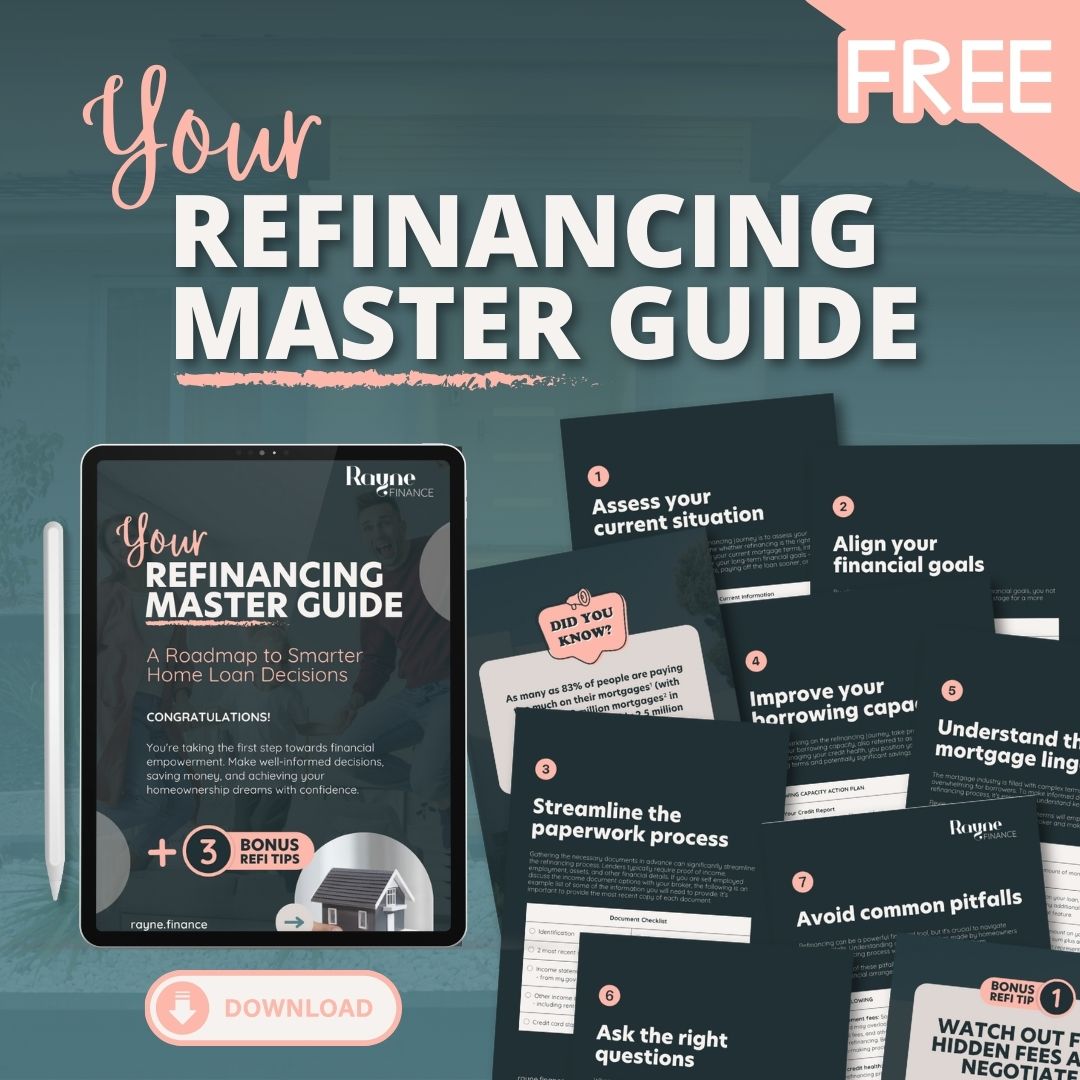
Refinancing involves reviewing your current mortgage, and potentially swapping your loan to another lender, who can better meet your current needs, wants and circumstances.
Refinancing can be a strategy to secure a lower interest rate, switch to a different type of loan and can also allow you to consolidate your debts or pay down your mortgage more quickly.
Another common reason borrowers look to refinance is to access equity – the amount you’d get from selling your home after settling any associated loans and any other costs associated with the property.
However, refinancing isn’t suitable for everyone. There are many different factors you’ll need to consider when thinking about refinancing a loan.
So how will you know that refinancing is the right option for you?
The first step is to speak to a professional, such as a mortgage broker, about your needs, objectives, current financial situation and whether you can afford a different loan structure, particularly if you have more than one property.
Are you looking to pay less interest?
If your purpose of refinancing is to aim for a lower interest rate, this could potentially save you a lot of money in the long-term.
While saving money is often one of the biggest benefits of refinancing, it may not be as straightforward as that and careful consideration is required.
Sometimes refinancing may only save you a small amount per year, particularly when you take into consideration any exit costs, application fees and taxes involved. Refinancing may also not offer benefits if the loan will attract Lenders Mortgage Insurance (LMI) or features like an offset account aren’t offered with the new loan.
However, if it’s going to save upwards of $1,000 a year, refinancing might be a sensible approach.
At this point, the broker will need to find out about your existing loan, repayments and current loan structure.
Your mortgage broker will also need to find out more about your current financial situation, including your income, any other current debts and about any assets you own.
The current value of the property is also taken into consideration, your broker will have access to current data that will indicate what your property is likely to be worth.
The broker will then review the various loan options and figure out whether it’s worth it for you to refinance.
Your mortgage broker can tell you if getting a lower interest rate from your current lender can be achieved without refinancing.
Do you want to change your loan type?
Refinancing may allow you to change to a different loan type, for example switching from a variable loan to an interest only loan.
If you do decide to go down the refinancing path, working with a broker rather than going straight to a lender has advantages.
Brokers generally have access to loan options from a range of different lenders and if there’s a better opportunity for you, they’re usually able to access it.
Do you want to consolidate your debts?
If you want to refinance to lower lending costs to help you manage your monthly repayments, speak to your mortgage broker who can negotiate with your current lender for a rate suitable to your current situation.
Your broker can also help you look at alternative options to consolidate your personal loans and credit cards into the one loan. This could help you in lowering your monthly repayments, or help you keep your repayments on time, and even save you interest in the long term.

Licensing statement: Rayne Finance ABN [70 605 100 838] is authorised under LMG Broker Services Pty Ltd Australian Credit Licence 517192. Disclaimer: (1) As with any financial scenario there are risks involved. This information provides an overview or summary only and it should not be considered a comprehensive analysis. You should, before acting in reliance upon this information, seek independent professional lending or taxation advice as appropriate and specific to your objectives, financial circumstances or needs. This publication is provided on the terms and understanding that: (2) LMG Broker Services Pty Ltd, Rayne Finance (Seed Lending Pty Ltd) and the authors, consultants and editors are not responsible for the results of any actions taken on the basis of information in this publication, nor for any error in or omission from this publication. (3) LMG Broker Services Pty Ltd, Rayne Finance (Seed Lending Pty Ltd) and the authors, consultants and editors, expressly disclaim all and any liability and responsibility to the maximum extent permitted by the law to any person, whether a purchaser or reader of this publication or not, in respect of anything, and of the consequences of anything, done or omitted to be done by any such person in reliance, whether wholly or partially, upon the whole or any part of the contents of this publication.
Explore other FAQs and Facts

Could Your Tax Return Save You $111,000 in Interest?
The average Australian tax return sits between $2,000 and $3,000. For homeowners, that money could do a lot more than disappear into everyday expenses. We ran the numbers on a $600,000 home loan and the result was surprising. Here’s what putting your tax return toward your mortgage could actually mean over time.

How a Bridging Loan Can Help You Buy Before Selling
Found your next home before selling your current one? Bridging loans are designed to help homeowners navigate the gap between buying and selling. This guide explains how bridging finance works, when it may make sense, and the things worth understanding before deciding whether it’s the right fit for your situation.

How to Use the Equity in Your Home
(And Whether You Actually Should)
You’ve built equity in your home. But do you know how much you actually have access to, and what you could do with it? This guide breaks down what usable equity is, what it can be used for, and honestly answers the questions most homeowners are too afraid to ask.

What happens to my mortgage in a divorce?
Dividing property after a separation can be overwhelming, especially when a mortgage is involved. Whether you plan to sell or refinance, it’s vital to understand your legal and financial responsibilities. This guide answers common questions to help you navigate your options with more clarity and avoid costly missteps during divorce.

How to buy your first home with a sibling or friend
Buying your first home with a sibling or friend can make it easier to get into the market. By combining deposits and sharing costs, you may be able to buy sooner or buy better. With support like the First Home Guarantee, co-ownership can be a practical path to ownership.

Experts outline their price and rent forecasts for 2026
Australia’s property market is entering 2026 with continued momentum, according to forecasts from Domain, SQM Research and Ray White Group. While growth rates are expected to vary by city and property type, the overall outlook points to rising prices and rents, shaped by interest rates, supply levels and broader economic conditions.

Grants, Schemes & Deposits: A 2026 Guide for First Home Buyers
Buying your first home is about more than just saving a deposit. This guide breaks down what a deposit really means, how much you might need, and the key government grants and schemes available in 2026 to help first home buyers get into the market sooner.

Savings: The Foundation of Your First Home Deposit
Saving for your first home is not just about how much money you have. Lenders also look at how your deposit has been built over time. Understanding the difference between savings and genuine savings early can make the entire home buying process clearer and far less stressful.

Buy now pay later (BNPL): Helpful for Christmas but will it hurt your home loan chances?
Did you use BNPL to get through Christmas? You’re not alone. But with new credit rules now in place, even small pay-later habits could affect your chances of getting a home loan. Here’s what’s changed, what lenders are looking at, and how to make sure your BNPL use doesn’t hold you back.

Regional Victoria: Why buying now stacks up
Regional Victoria’s property market has hit a sweet spot in 2025. Towns like Ballarat, Bendigo and the Surf Coast are seeing steady growth supported by real demand, thriving infrastructure and better buyer choice. With balanced conditions and lasting value on offer, it’s an ideal time to make your move locally.